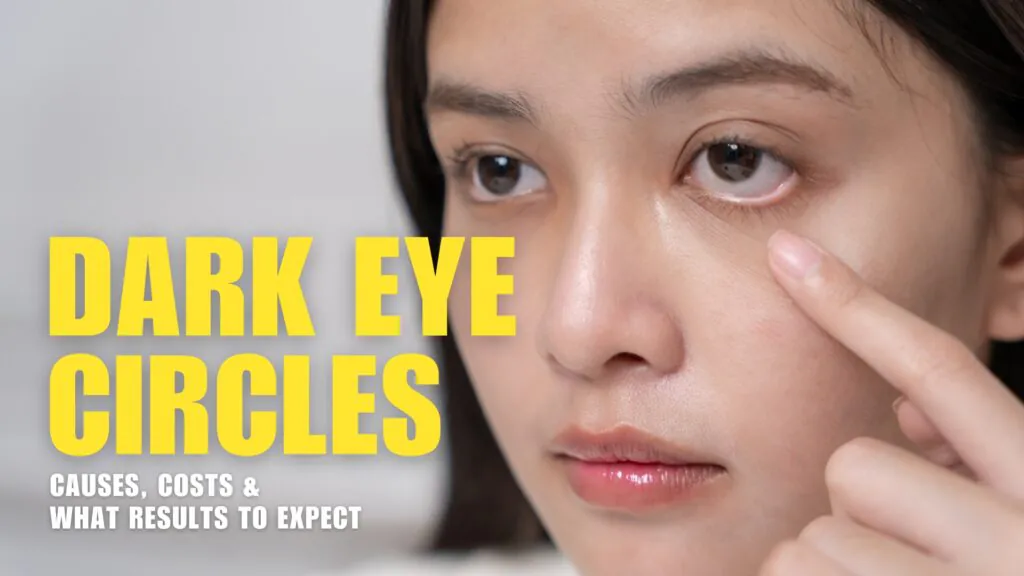
Dark eye circles are one of the most common concerns we see in aesthetic clinics across Singapore. Whether you are a busy executive in the CBD, a young parent juggling responsibilities, or a professional constantly on video calls, under-eye shadows can make you look tired, stressed, or older than you actually are.
The good news? Dark eye circles are treatable but only when the correct cause is identified.
Understanding Dark Eye Circles: It’s Not Just “Lack of Sleep”
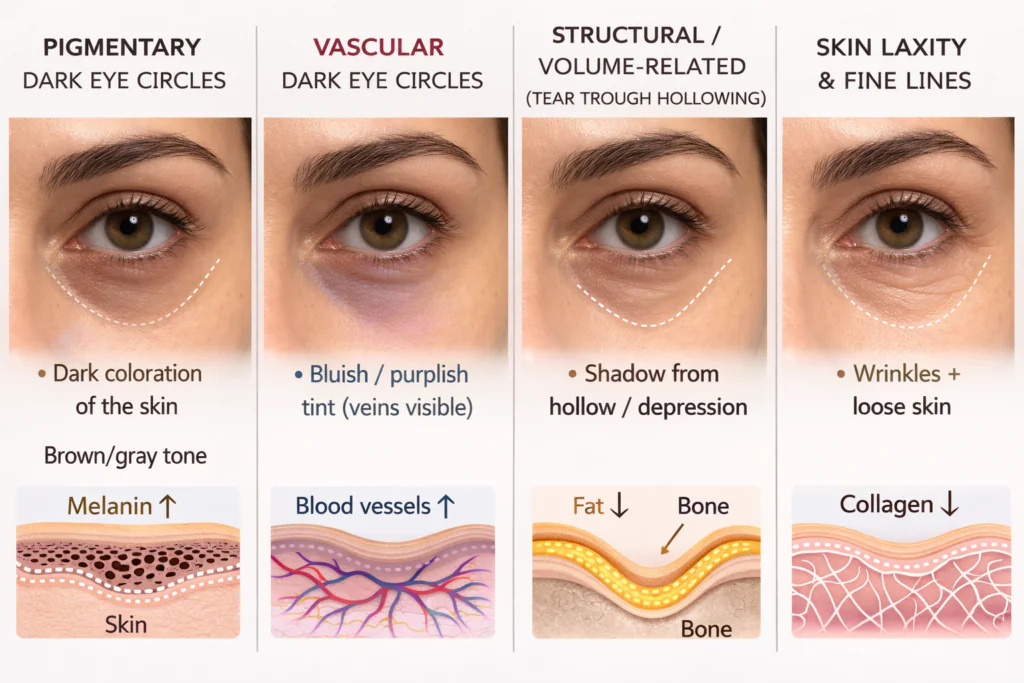
Many people assume dark eye circles are purely due to insufficient rest. While sleep deprivation can worsen their appearance, most persistent dark eye circles are caused by structural, pigmentary, vascular, or skin quality issues or a combination of these.
1. Pigmentary Dark Eye Circles
These appear brownish and are caused by:
- Genetic predisposition
- Post-inflammatory hyperpigmentation (eczema, rubbing, allergies)
- Chronic sun exposure
- Ethnic skin characteristics (common in Asian skin types)
In Singapore, where UV exposure is high year-round, pigmentation is a major contributor.
2. Vascular Dark Eye Circles
Some dark circles appear bluish, purplish, or even reddish. These are usually vascular in nature. The skin under the eyes is one of the thinnest areas on the body. When it becomes thinner, underlying blood vessels become more visible.
Allergies, sinus congestion, and chronic eye rubbing – common in Singapore’s humid, air-conditioned environments – can further increase vascular congestion, making the under-eye region appear darker.
3. Structural / Volume-Related Dark Eye Circles (Tear Trough Hollowing)
This is extremely common.
When there is:
- Volume loss in the tear trough area
- Deep-set eyes
- Midface volume deficiency
Light creates a shadow in the hollow area, making the under-eye look dark even if the skin tone is normal. This type of dark circle cannot be treated with creams or lasers alone because the problem is structural.
4. Skin Laxity and Fine Lines
As collagen production declines with age, the skin becomes thinner and less elastic. Fine lines develop, and the under-eye area starts to look crepey. Thinner skin allows underlying vessels and pigmentation to show through more prominently.
5. Lifestyle Factors
Common contributors in Singapore include:
- Long working hours
- High stress levels
- Excessive screen exposure
- Chronic sleep debt
However, lifestyle changes alone rarely eliminate established dark eye circles.
Why Dark Eye Circles Are So Common in Singapore
Several factors make this condition particularly prevalent locally:
Firstly, the equatorial climate means continuous UV exposure throughout the year. Unlike countries with seasonal variation, there is no “winter break” from sun damage. This constant exposure accelerates pigmentation and collagen breakdown.
Secondly, many individuals in Singapore have Asian skin types, which are more prone to post-inflammatory hyperpigmentation. Even mild irritation, such as rubbing from allergies, can trigger pigment deposition.

Lastly, lifestyle factors cannot be ignored. Long working hours, high stress levels, heavy screen usage, and sleep debt are common in urban Singapore. While these may not be the primary cause, they certainly exacerbate existing dark circles.

Dark Eye Circle Treatments Available in Singapore
The most important principle in treating dark eye circles is accurate diagnosis. Different causes require very different treatments. In many cases, a combination approach yields the best results.
1. Hyaluronic Acid Fillers for Tear Trough Correction
For patients whose dark circles are caused by structural hollowing, hyaluronic acid fillers are often the most effective solution.
Brands such as Juvederm and Teosyal are commonly used in Singapore for tear trough correction.
Rather than “filling” the under-eye indiscriminately, the treatment involves carefully restoring volume along the tear trough ligament and sometimes the midface. By lifting and supporting the area, the shadow that creates the dark appearance is reduced. When performed with proper technique, the result is subtle and natural – patients look refreshed rather than obviously treated.
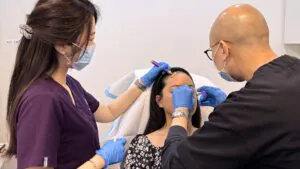
The procedure requires precision. The under-eye region contains delicate blood vessels and thin skin. Experienced injectors typically use fine cannulas or needles and conservative amounts of filler to minimise risks such as lumpiness or swelling.
Results are usually visible immediately and can last approximately nine to twelve months, depending on the individual.
2. Laser Treatments for Pigmentary Dark Circles
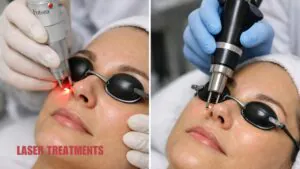
When pigmentation is the dominant cause, laser therapy can be effective.
Platforms such as Fotona and Q-switched Nd:YAG systems like Helios III are frequently used to target excess melanin.
Laser treatments work by breaking down pigment particles within the skin while also stimulating collagen production. Over a series of sessions, the under-eye area gradually appears brighter and more even in tone.
It is important to understand that improvement is progressive rather than immediate. Most patients require multiple sessions spaced several weeks apart. Strict sun protection is essential throughout the treatment period to prevent recurrence.
3. Collagen-Stimulating Injectables

In patients with thin, ageing under-eye skin, collagen-stimulating injectables can improve skin quality over time. These treatments work by stimulating the body’s own collagen production.
Unlike hyaluronic acid fillers that provide immediate volume, biostimulatory injectables produce gradual thickening and strengthening of the skin. This helps reduce translucency and improve fine lines. Results typically develop over several months and can be long-lasting.
4. Skinboosters and Hydration Injectables
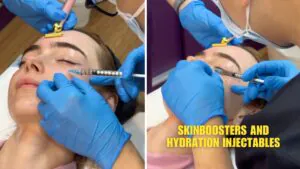
Skin hydration plays a major role in under-eye appearance. For patients with early signs of ageing or dehydration-related dullness, injectable skin hydration treatments may be recommended. Products such as HA based or PN based skinboosters enhance skin elasticity and hydration by distributing hyaluronic acid and other effective ingredients evenly within the skin.
Rather than adding volume, these treatments improve overall skin texture and radiance, making the under-eye area appear smoother and healthier.
These treatments are especially suitable for patients with early ageing signs.
5. Combination Therapy (Most Effective Approach)
In real-world practice, most patients have mixed causes. A patient may have mild tear trough hollowing combined with pigmentation and thin skin. In such situations, a single treatment modality rarely provides optimal results.
A carefully planned combination approach, such as filler for structural support, laser for pigmentation, and skinboosters for skin quality, often produces the most natural and comprehensive improvement.
What to Expect During Treatment
Understanding the treatment process helps patients feel more confident and prepared.
The Consultation Process

Every treatment begins with a detailed assessment. The doctor evaluates skin thickness, degree of pigmentation, tear trough depth, facial symmetry, and medical history. Good lighting and clinical photography help identify whether the darkness is pigment-based, shadow-based, vascular, or a combination.
A personalised treatment plan is then developed.
During Filler Treatment
If tear trough filler is recommended, a topical numbing cream is first applied to enhance comfort. The area is cleansed thoroughly, and precise markings may be made.
The filler is then carefully injected using either a fine needle or microcannula. Most patients describe the sensation as mild pressure rather than pain. The procedure typically takes 20 to 30 minutes.
Afterwards, slight swelling or bruising may occur but is usually minimal. Many patients return to work the next day.
During Laser Treatment
For pigment-related dark circles, protective eye shields are worn before the laser session begins. Patients may feel a brief snapping sensation as the laser energy targets pigment in the skin.
The treatment is generally quick, and mild redness may occur afterwards. Downtime is minimal, though sun protection is critical in the following days. Gradual brightening becomes noticeable after several sessions.
During Collagen-Stimulating or Skinbooster Treatments
Injectable treatments aimed at improving skin quality are performed with fine needles. Local anaesthetic may be used to enhance comfort. Mild swelling or small injection marks may be visible for a few days.
Unlike fillers, these treatments require patience. Improvements develop gradually as collagen production increases and hydration improves.
Why Personalised Treatment Matters
Every under-eye is different. Two patients with “dark eye circles” may require completely different solutions.
The best outcomes occur when treatment is:
- Individualised
- Conservative
- Anatomically precise
- Sometimes staged over time
Final Thoughts: Treating Dark Eye Circles Effectively in Singapore
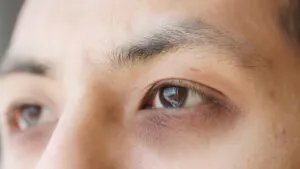
In Singapore’s climate and lifestyle environment, pigmentation, structural hollowing, and skin thinning often coexist. This makes proper diagnosis essential.
Modern aesthetic medicine now offers:
- Structural correction with hyaluronic acid fillers
- Pigment reduction with lasers
- Collagen stimulation
- Skin quality improvement with injectables
The key lies in understanding that dark eye circles are not one single condition, but a combination of anatomical and skin factors.
When the right treatment plan is chosen, patients often experience a brighter, more refreshed appearance, an improved facial harmony, and increased confidence.
If you are considering treatment, start with a comprehensive medical consultation. An accurate diagnosis is the first step toward natural and effective results.
Frequently Asked Questions (FAQs)
1. Can eye creams remove dark eye circles permanently?
Topical eye creams may help with mild pigmentation or dehydration, but they cannot correct structural tear trough hollowing or significant volume loss. Medical treatments are often required for noticeable and long-lasting improvement.
2. How much do dark eye circle treatments cost in Singapore?
Costs vary depending on the type of treatment and severity of the condition.
- Tear trough fillers typically range from SGD $800 to $1,500 per syringe.
- Laser treatments may range from SGD $250 to $600 per session.
- Collagen-stimulating injectables may cost more due to the skill level and number of sessions required.
A consultation is necessary to determine the most appropriate and cost-effective treatment plan.
3. Are tear trough fillers safe?
When performed by an experienced medical practitioner, tear trough fillers are generally safe. The under-eye area is delicate and requires detailed anatomical knowledge and precise injection technique. Choosing a reputable aesthetic clinic in Singapore significantly reduces risks such as swelling, lumps, or vascular complications.
4. How long do dark eye circle treatments last?
Longevity depends on the treatment used:
- Hyaluronic acid fillers typically last 9 to 12 months.
- Laser results can be long-lasting but may require maintenance if pigmentation recurs.
- Collagen-stimulating treatments may last more than a year as they work by encouraging natural collagen production.
Maintenance treatments are often recommended to sustain results.
5. Is there downtime after treatment?
Downtime is usually minimal.
Fillers may cause mild swelling or bruising for a few days. Laser treatments may cause temporary redness. Most patients return to work the next day.
Your doctor will advise you on post-treatment care, including sun protection.
6. How many sessions are needed to see results?
Some treatments, such as fillers, provide immediate improvement in a single session.
Laser and collagen-stimulating treatments usually require more sessions spaced 4-6 weeks apart. Your doctor will tailor the treatment plan according to your condition.