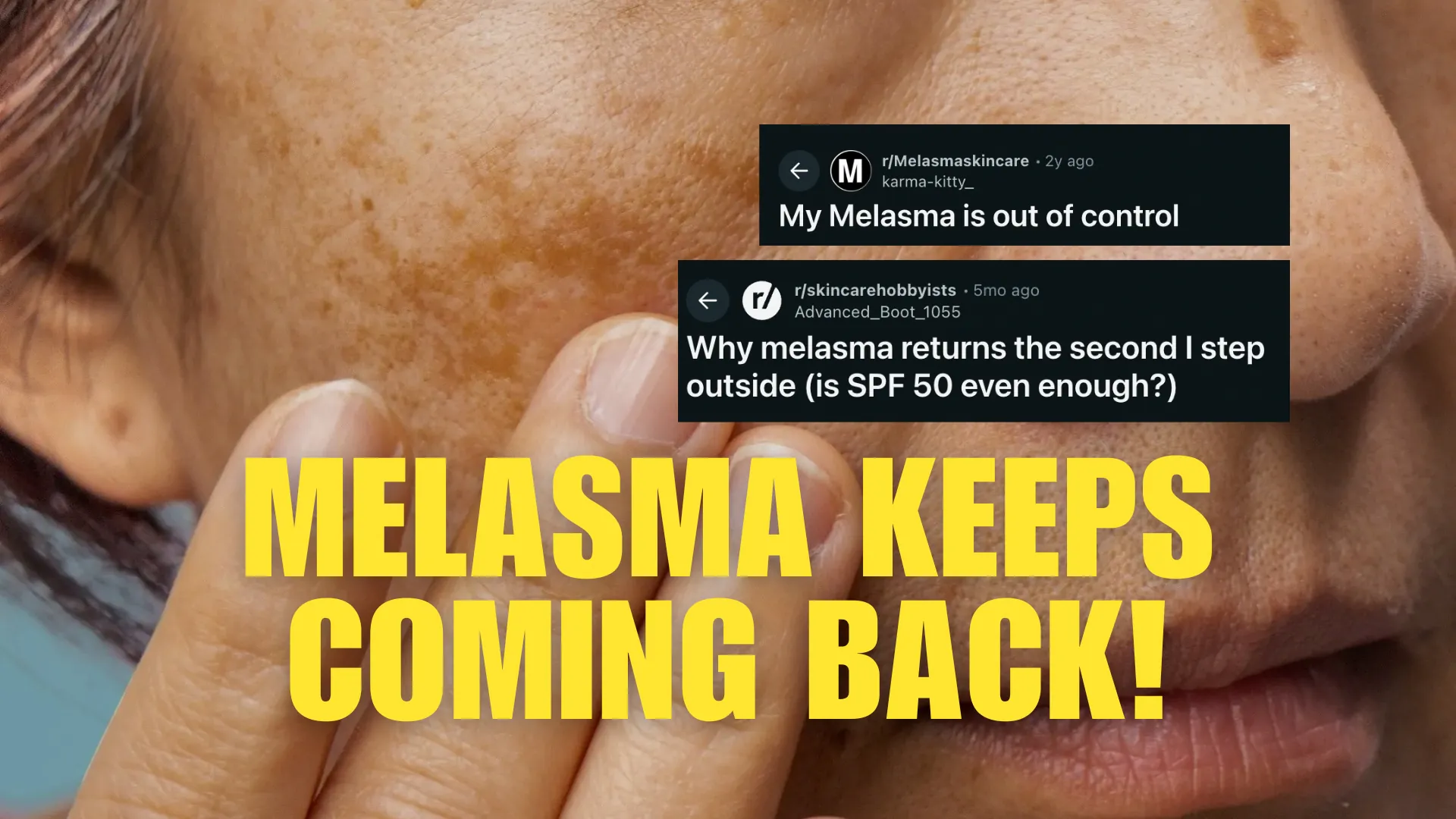
You’re not imagining it, and you’re not doing something wrong. Recurring melasma is one of the most frustrating skin concerns precisely because it isn’t a surface level problem. It’s tied to how your skin makes melanin, how your cells respond to light and heat, your hormones, inflammation, and everyday habits. The visible patches are just the signal, clear them without addressing what’s driving them and they’ll come back.
Here’s what’s actually happening under the surface, and how to break the cycle for good.
What’s really going on in your skin
Melasma happens when melanocytes (the cells that produce melanin) go into overdrive. Normally, melanin protects your skin from UV radiation. In melasma, these cells become hypersensitive and pump out far more pigment than needed.
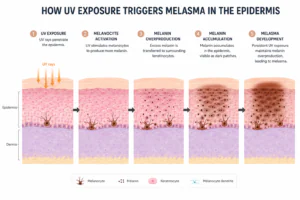
Treatment doesn’t just “remove a colour.” It calms overactive melanocytes. But even once patches fade, those cells stay primed, like a smoke alarm that’s gone off once and is now quicker to trigger again. That’s why melasma-prone skin needs ongoing care, not a one-and-done fix, similar to how you’d manage acne-prone skin long term.
Pigment also sits at different depths: some near the surface, some deeper in the dermis, often a mix of both. Surface treatments can improve appearance quickly, but deeper pigment and unresolved triggers are what bring melasma back.
During a melasma flare: UV exposure, visible light, heat, hormonal shifts, inflammation or harsh skincare send melanocytes into pigment-production mode. Skin naturally renews and can lighten during cooler, lower-sun periods but repeated triggers interrupt that process. Even a great run of laser treatments can be undone by a week of unprotected sun on holiday.
The role of melanin in recurring melasma
Melanin itself is not harmful. It absorbs UV radiation and helps limit sun damage. The problem is when production becomes excessive and uneven, as in melasma.
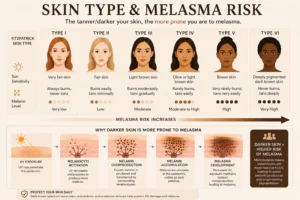
People with richer skin tones, including many Asian skin types, can be more prone to melasma because melanocytes react strongly to inflammation and environmental stress. Even minor irritation, a breakout, or an overly aggressive treatment can drive more pigment.
That sensitivity is why melasma treatment demands balance: the goal is to reduce pigment without provoking irritation. A common mistake is reaching for harsh products that promise fast whitening. These may give a brief improvement but can damage the skin barrier, cause inflammation, and ultimately worsen melasma. Healthy melasma management calms the skin while gradually reducing excess pigment.
The 3 biggest reasons melasma keeps returning
@brynleytorres My husband says he loves my spots and that makes me laugh when I’m feeling sad about the amount of melasma that now covers my face. I used to see an esthetician regularly to help manage and reduce it but it’s only gotten worse with pregnancy/hormones plus I live in hot climates so that doesn’t help either. Most ppl talk about getting a b00b job after kids, I’m looking forward to some serious skincare treatments😂🙌🏼 so until then, I’ll learn to love my spots too. #fyp #insecurity #melasmatreatment #melasma #loveyourskin
- Sun and visible light – the #1 trigger. Even brief outdoor moments, driving near windows or sitting under bright indoor light can restart pigment production. It’s not just UV, visible light (including blue light) and heat matter too. UVA damage builds slowly, so patches can reappear weeks or months after your skin looks clear. In Singapore, there’s no “off season” for sun protection.
The fix: Daily broad-spectrum, tinted sunscreen. The iron oxides in tinted formulas block visible light that plain sunscreens miss. Apply it like brushing your teeth, that is daily. And reapply during outdoor activity.
- Hormonal changes. Pregnancy, birth control, hormone therapy, thyroid conditions and stress can all activate melanocytes, hence melasma’s nickname, “the mask of pregnancy.” Because so many triggers stack together (hormones, UV, heat, genetics, inflammation), the realistic goal isn’t eliminating triggers entirely, it’s combining pigment-reducing treatment with strategies that prevent reactivation.
- Stopping treatment the moment the skin looks clear. This is the big one. Deeper melanocytes often stay reactive even when the surface looks fine. The moment they’re re-exposed to UV or heat, pigment production ramps back up. Think of it like fitness: a month of training doesn’t buy you lifelong results without upkeep. Maintenance – sunscreen, pigment-control ingredients, gentle skincare, and periodic professional treatment – is what keeps results.
Is it actually melasma?
Not every dark patch is melasma, and getting the diagnosis wrong wastes months on the wrong treatment. Quick differences to know:
- Post-inflammatory hyperpigmentation (PIH): follows an injury, breakout or aggressive treatment, and maps exactly to where the skin was inflamed, unlike melasma’s more symmetrical patches.
- Lichen planus pigmentosus (LPP): greyer in tone, shows up on areas of melasma usually spares (temples, neck, jaw) and needs an anti-inflammatory approach, not standard melasma treatment.

Source: https://www.researchgate.net/figure/LPP-affecting-the-face-neck-and-chest_fig1_336685977
- Acanthosis nigricans: velvety and thickened, not flat, often linked to insulin resistance or PCOS.
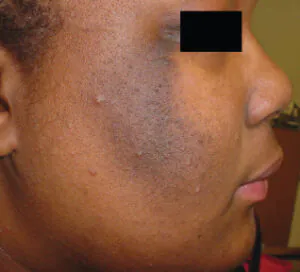
Source: https://www.consultant360.com/article/facial-acanthosis-nigricans
- Pigmentary demarcation lines (PDLs): a normal symmetrical variation in pigment, not a disorder, no treatment needed.

Source: https://www.instagram.com/reels/DJyq6l9IN_8/
A proper professional assessment identifies the exact condition, pigment depth and your personal triggers, so you’re not spending money on treatments that were never going to work for you.
Why melasma treatment sometimes FAIL
Two common culprits: using a treatment suited for sunspots or acne scars (aggressive, heat-heavy methods can inflame melasma-prone skin and cause a rebound) and stopping care once skin looks better instead of maintaining it.
How we approach recurring melasma
Rather than one procedure, effective melasma care is a personalised, layered plan that may include:
- Prescription topicals: tranexamic acid, hydroquinone (in supervised cycles), cysteamine, triple-action creams
- Oral tranexamic acid for stubborn or recurrent cases, after medical screening
- Gentle, correctly-dosed laser or energy-based treatment chosen specifically for melasma
- Skinboosters and medical-grade skincare to strengthen the skin barrier
- Rigorous daily sun and visible-light protection: the foundation everything else depends on
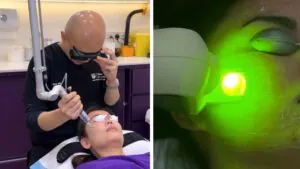
On laser specifically: it works by breaking down pigment for the body to clear, but success hinges on correct diagnosis and settings. Too conservative and nothing happens; too aggressive and it can worsen melasma, especially in richer skin tones. Aftercare matters just as much. This is why lasers for melasma should only be performed by a qualified practitioner who selects the technology and dose to suit your skin type.
Daily habits that keep melasma from returning
@glowwithava im gonna be honest, pregnancy hyperpigmentation & melasma is sooo real. shopmy > skincare to find my fav mineral spf. #melasma #pregnancyskin #mineralsunscreen #tintedsunscreen #hyperpigmentation
Why sunscreen is non-negotiable
Daily sunscreen is the foundation of melasma control. Even the best treatments lose ground if UV and visible light keep triggering pigment. For melasma, choose a tinted sunscreen that offers broad-spectrum protection, visible-light defence, comfortable daily wear, and a formulation suited to your skin type. And of course, reapply during outdoor activity.
Building a melasma-friendly skincare routine
For melasma, a simple, calming routine beats a pile of aggressive products. A melasma-friendly routine usually includes a gentle cleanser, an antioxidant serum, a pigment-control treatment, a barrier-supporting moisturiser, and sunscreen every morning. Consistency matters far more than the number of products.
The bottom line
Melasma isn’t beaten with a quick fix – it’s managed with a plan you can actually stick to. Consistent sun protection, the right skincare, appropriate professional treatment and a bit of patience can significantly reduce recurrence and keep your complexion clear. If melasma keeps returning despite your best efforts, a proper consultation can identify your specific triggers and build a plan around them.
Read more about our melasma treatments here.