You invested time and money into a HIFU (High-Intensity Focused Ultrasound) treatment, expecting the dramatic skin lifting and tightening you saw in before-and-after photos. But weeks later, you’re staring at nearly unchanged skin and wondering: did this non-surgical facelift alternative actually work?
If your HIFU results have been underwhelming, you’re not alone. Many patients experience disappointing outcomes from skin tightening treatments and the reasons aren’t always what you’d expect.
The truth? HIFU success isn’t random. It depends on specific, controllable factors, from device quality to practitioner expertise to your own skin condition. When any of these elements fall short, even the most expensive HIFU machine can produce minimal or invisible results.
Here are 7 most common reasons HIFU treatments fail, what you should have experienced, and how to get better results from your next aesthetic procedure.
1. Your Clinic Used a Low-Quality or Counterfeit HIFU Device
One of the leading reasons HIFU treatments fail is the use of substandard or counterfeit machines. The aesthetic industry is flooded with low-cost devices that imitate premium HIFU systems (like Ultherapy, Doublo, or Liposonix) but lack the technology required to deliver focused ultrasound energy accurately.
Genuine medical-grade HIFU systems use precisely calibrated transducers to deliver concentrated ultrasound energy at specific skin depths, typically 1.5mm to 4.5mm below the surface. This energy creates controlled thermal injury in the SMAS layer (the same tissue layer surgeons target during facelift surgery), triggering deep collagen remodeling.
Red flags of a Low-Quality HIFU Device
Watch for these warning signs at your clinic:
- Suspiciously cheap pricing (authentic HIFU costs $1000–$3000+)
- Sessions that feel rushed (proper HIFU takes 30-60 minutes, not 10-15)
- Uneven results across the face (suggests scattered energy delivery)
- Extreme pain without visible improvement (real HIFU is uncomfortable but targeted)
- No visible improvement even after 3-6 months
Clinics using reputable HIFU technology typically provide better precision, safety, and longer-lasting outcomes
2. Your Practitioner Lacked Experience
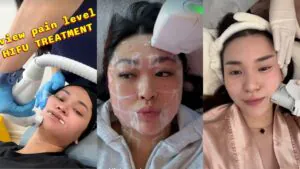
Even the most advanced HIFU device will disappoint in the wrong hands. That’s why two practitioners using the same machine can give very different patient satisfaction in terms of skin lifting and tightening results.
Common Mistakes Inexperienced HIFU Practitioners Make
- Deliver insufficient energy
- Miss critical treatment zones
- Use incorrect cartridge depths
- Fail to customise settings for individual skin types
- Overlap treatment lines improperly
Experienced aesthetic practitioners understand facial anatomy thoroughly and know how to target areas requiring lifting while protecting sensitive structures.
Why Expertise Matters in HIFU
The ultrasound energy must be delivered at precise depths and patterns to trigger collagen contraction effectively. Small mistakes in technique can drastically reduce effectiveness.
Patients often assume HIFU is a simple facial procedure, but achieving optimal lifting requires medical understanding, strategic mapping and individualized planning.
3. Your Expectations Were Set Too High
This is the hard truth: HIFU cannot replicate a surgical facelift.
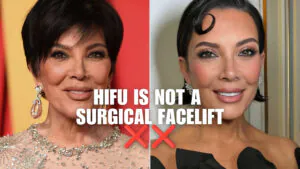
HIFU is a powerful non-surgical skin tightening treatment, but it works within biological limits. Surgery physically repositions and lifts tissue; HIFU stimulates collagen production and causes gentle contraction. Both improve appearance, but the degree of lift is fundamentally different.
HIFU works best for:
- Mild to moderate skin laxity
- Early sagging around the jawline
- Mild jowls
- Brow lifting
- Fine line reduction
- Preventative anti-aging
What HIFU Cannot Fully Correct
- Severe loose skin
- Significant jowling
- Heavy neck sagging
- Excess fat deposits
- Advanced facial aging
If you have significant jowling, heavy sagging, or advanced skin laxity, HIFU alone may disappoint. These patients often see better results with surgery or combination treatments (HIFU + fillers + RF microneedling).
4. Your Skin Condition Wasn’t Ideal for HIFU
HIFU works best on specific skin types. If your skin falls outside the “sweet spot,” results may be limited or disappointing.
Ideal HIFU Candidates
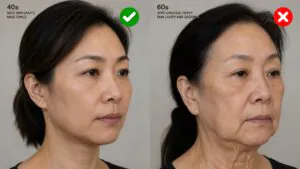
The best HIFU results are usually seen in patients aged 30 to 55 with mild to moderate skin laxity, relatively healthy skin structure, with only mild facial volume loss.
Why Some Patients See Poor Results
HIFU relies on your body’s ability to produce new collagen. If collagen production is already compromised, improvements are limited:
- Smokers have impaired collagen synthesis and poor wound healing
- Elderly patients (70+) may have limited collagen remodelling potential
- Patients with advanced skin laxity lack sufficient elasticity to “snap back”
- Significant facial volume loss makes lifting appear minimal (“sunken” look overshadows tightening)
If you have significant facial volume loss alongside skin laxity, combining HIFU with dermal fillers or collagen stimulators often produces dramatically better results than HIFU alone.
5. You Didn’t Wait Long Enough for Collagen to Rebuild
Unlike fillers or botulinum toxin, HIFU results are not immediate. The treatment stimulates gradual collagen remodelling beneath the skin, which takes time.
Typical HIFU Timeline
- Mild initial tightening: 2-4 weeks
- Progressive collagen stimulation: 6-12 weeks
- Peak improvement: 3-6 months
If you evaluated your HIFU results at 2-3 weeks and saw minimal change, that’s completely normal. The transformation happens over months, not days.
6. Insufficient Energy Was Delivered to Your Skin
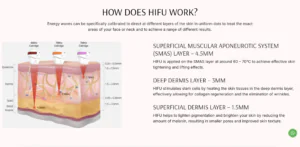
(Read more about how HIFU works here)
HIFU requires therapeutic energy to stimulate collagen tightening and growth effectively. Some clinics intentionally use lower energy settings to minimise patient discomfort or speed up re-appointments. The result? Weak collagen stimulation and underwhelming tightening.
Why Practitioners Underdeliver Energy
- Fear of causing patient discomfort (HIFU should feel uncomfortable but tolerable)
- Rushed appointments
- Device limitations or malfunction
- Lack of experience knowing appropriate energy levels
- Poor treatment protocols
Proper HIFU should cause mild-to-moderate discomfort during treatment. If your session was painless, energy levels were likely too low. Discomfort is often a sign that ultrasound energy is effectively reaching deep tissue layers.
7. Poor Lifestyle Habits Reduced Your Results
Even perfect HIFU treatment won’t deliver optimal results if your lifestyle sabotages collagen production.
Factors That Can Reduce HIFU Effectiveness
- Smoking
- Excessive alcohol consumption
- Poor nutrition
- Chronic stress
- Inadequate sleep
- Excessive sun exposure
- Rapid weight fluctuations
Collagen regeneration depends heavily on overall skin health and cellular repair mechanisms.
How to Support Better HIFU Results
To maximise treatment outcomes:
- Stay hydrated
- Use daily sunscreen
- Avoid smoking
- Maintain stable body weight
- Follow a collagen-supportive diet
- Use medical-grade skincare products
- Attend recommended maintenance sessions
Healthy skin responds more effectively to collagen stimulation treatments.
Did Your HIFU Actually Work? Signs of Success
Patients sometimes overlook subtle but meaningful improvements because HIFU produces natural-looking changes rather than dramatic transformations.
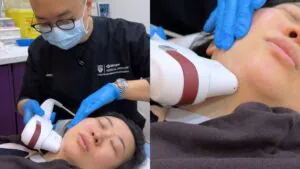
Signs Your HIFU Was Successful
- Sharper jawline definition
- Firmer cheeks
- Reduced skin crepiness
- Improved eyebrow position
- Tighter neck contour
- Smoother skin texture
- Gradual facial lifting
Photographs taken before treatment and after 3-6 months often reveal improvements more clearly than daily mirror observations.
Can Failed HIFU Treatments Be Corrected?
If you find your first HIFU result disappointing, the good news is that there are ways to improve the result.
Options to Improve Results
- Repeat HIFU with a more experienced practitioner using higher energy levels
- Combination therapies: RF microneedling, radiofrequency tightening, or laser resurfacing
- Collagen stimulators for volume restoration
- Dermal fillers to replace lost volume and enhance lift
- Laser tightening procedures
The key: Have a detailed consultation with an experienced aesthetic provider to diagnose why the original treatment did not live up to expectations. Only then can they recommend the most effective corrective approach.
How to Choose the Right Clinic for HIFU

Selecting the right provider dramatically increases the likelihood of successful results.
What to Look For
- Medical-grade HIFU technology
- Experienced aesthetic practitioners with extensive HIFU background
- Transparent consultations with honest expectation-setting
- Customised treatment plans
- Follow-up support
Of course, avoid clinics that focus solely on low pricing or unrealistic promises.
The Bottom Line: Why HIFU Works And Why It Sometimes Doesn’t
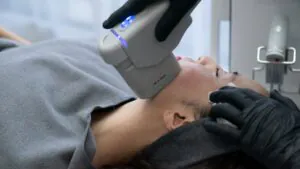
HIFU can deliver impressive skin tightening and lifting when performed correctly on suitable candidates using high-quality technology. However, poor devices, inexperienced practitioners, unrealistic expectations and inadequate treatment protocols are common reasons patients feel disappointed with their results.
The good news is that most of these factors are within your control. By choosing a reputable clinic, having realistic expectations, understanding the treatment timeline and supporting collagen production with healthy habits, you significantly increase your chances of seeing meaningful results.
When properly planned and skilfully performed, HIFU remains one of the most effective non-surgical anti-aging treatments for improving skin firmness, contour, and collagen production naturally.