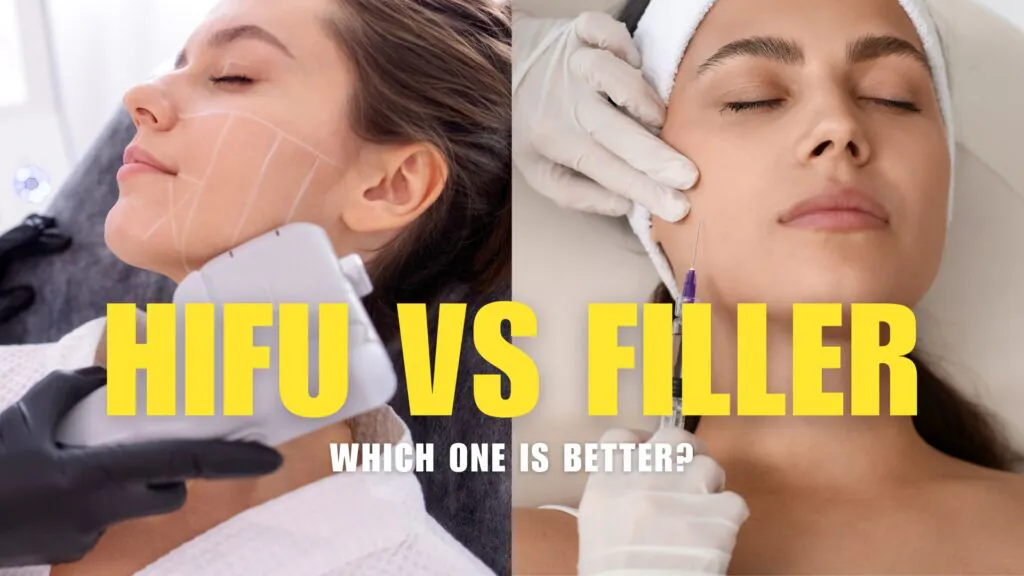
As an aesthetic doctor with more than 15 years of experience in facial rejuvenation and injectables, I often see confusion around the question:
“Should I do HIFU or filler?”
The answer is rarely one-size-fits-all.
Understanding Facial Ageing: Why Different Treatments Are Needed
Before comparing HIFU and dermal fillers, it’s important to understand how the face ages.
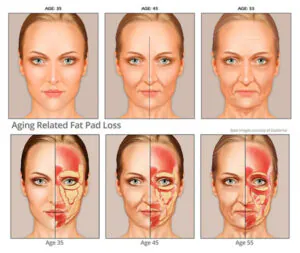
Facial ageing is not caused by just one factor. It is a combination of:
- Skin laxity– loss of collagen and elastin leading to sagging
- Volume loss– thinning of fat pads and bone resorption
- Changes in skin quality– dullness, fine lines, texture changes
- Gravitational descent– tissues shifting downward over time
HIFU and dermal fillers target different layers of this ageing process.
What Is HIFU (High-Intensity Focused Ultrasound)?
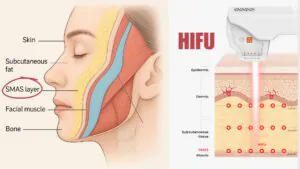
How HIFU Works
HIFU is an energy-based treatment that delivers focused ultrasound energy deep into the skin, targeting layers that were traditionally only accessible through surgical facelifts.
Specifically, HIFU targets:
- The deep dermis
- The Superficial Musculoaponeurotic System (SMAS)layer
Importantly, HIFU does not add volume. Its primary function is tightening and lifting.
Common Areas Treated with HIFU
In Singapore aesthetic clinics, HIFU is commonly used for:
- Jawline and jowls
- Cheeks and mid-face lifting
- Submental area (double chin)
- Neck tightening
- Brow and upper face lift
What Results Can Patients Expect from HIFU?
Patients typically notice:
- Firmer skin
- Improved jawline definition
- Subtle lifting of sagging areas
- These results usually appear gradually, developing over 2-3 months
Results can last 9–18 months, depending on age, skin condition, and lifestyle factors.
What Are Dermal Fillers?

How Dermal Fillers Work
Dermal fillers are injectable treatments designed to:
- Restore lost volume
- Improve facial contours
- Support structural integrity of the face
Most dermal fillers used in Singapore today are hyaluronic acid (HA)-based, though other types exist.
Unlike HIFU, dermal fillers work by adding volume and structural support.
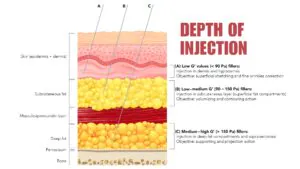
Common Areas Treated with Dermal Fillers
Dermal fillers are highly versatile and commonly used for:
- Cheeks and mid-face volume restoration
- Temples
- Nasolabial folds
- Marionette lines
- Chin and jawline contouring
- Tear troughs (under-eye hollows)
What Results Can Patients Expect from Fillers?
Patients typically see:
- Improved facial balance
- More youthful contours
- Softening of deep folds
- These results are immediate or near-immediate
Depending on the filler used and area treated, results last 9–18 months.
Key Differences Between HIFU and Dermal Fillers
| Aspect | HIFU | Dermal Fillers |
| Main Function | Skin tightening & lifting | Volume restoration & contouring |
| Mechanism | Ultrasound-induced collagen stimulation | Injectable volume support |
| Onset of Results | Gradual (2–3 months) | Immediate |
| Downtime | Minimal | Minimal |
| Best For | Skin laxity | Volume loss, facial shaping |
| Reversibility | Not reversible | HA fillers are reversible |
| Longevity | 9–12 months | 9–18 months |
Which Patients Are Suitable for HIFU?

HIFU is best suited for patients who:
- Have mild to moderate skin laxity
- Notice early jowling or sagging
- Prefer a non-injectable option
- Want gradual, natural tightening
- Are not ready for surgical lifting
HIFU is less effective for:
- Severe skin laxity
- Significant volume loss
- Very thin or heavily sun-damaged skin
Which Patients Are Suitable for Dermal Fillers?

Dermal fillers are ideal for patients who:
- Have visible volume loss
- Look “sunken” or hollow
- Want immediate rejuvenation
- Need facial contour enhancement
- Have structural ageing rather than just skin laxity
Fillers may not be ideal as a standalone treatment for patients whose main concern is sagging without volume loss.
HIFU vs Fillers: Why Many Patients Actually Need Both
One of the biggest misconceptions in aesthetic medicine is that patients must choose either HIFU or fillers.
In reality, facial ageing is multidimensional, and combination treatments often deliver superior, longer-lasting results.
Why Combination Treatments Work Better
- HIFU tightens the skin and underlying support
- Fillers restore lost volume and structural lift
- Together, they address both laxity and deflation
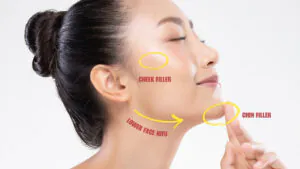
For example:
- HIFU can tighten the jawline
- Fillers can restore chin projection and cheek support
- The combined effect is a sharper, more youthful face without overfilling
In my clinical experience, patients who undergo properly planned combination treatments often achieve:
- More natural outcomes
- Better longevity
- Lower filler volumes required
Treatment Sequencing: Which Should Be Done First?
In most cases, when a rejuvenation plan consist both treatments:
- HIFU is performed first
- Dermal fillers are added later, if needed
This allows the practitioner to:
- Assess true volume loss after tightening
- Avoid overfilling
- Achieve more precise facial balance
Safety Considerations in Singapore

Both HIFU and dermal fillers are safe when:
- Performed by trained medical professionals
- Using FDA-approved or HSA-approved devices and products
- Proper patient selection is followed
In Singapore, patients should always:
- Seek treatment from MOH-licensed clinics
- Avoid non-medical operators
- Understand that skill and experience matter more than the device or brand alone
Frequently Asked Questions (FAQ)
1. Is HIFU painful?
With adequate numbing protocols, most patients describe HIFU as tolerable. Sensation varies by area and individual pain threshold.
2. Can fillers make my face look unnatural?
When performed correctly, dermal fillers should enhance and restore — not overfill. Unnatural results usually come from poor technique or excessive volume.
3. How long do results last?
HIFU results typically last 9–12 months. Dermal fillers last 9–18 months depending on the product and area treated.
4. Can I do HIFU and fillers on the same day?
In some cases, yes — but many practitioners prefer staging treatments for optimal results and safety.
5. Which treatment is more cost-effective?
Cost depends on individual needs. HIFU treats larger areas, while fillers are tailored by volume and location. A personalised consultation is essential.
6. Is there downtime?
Both treatments have minimal downtime. Mild redness or swelling may occur but usually resolves quickly.
Final Thoughts: Choosing the Right Treatment for You

HIFU and dermal fillers are not competing treatments-they are complementary tools in modern facial rejuvenation.
The best outcomes come from:
- A thorough facial assessment
- Understanding the underlying cause of ageing
- A customised treatment plan designed by an experienced practitioner
If you are considering non-surgical facial rejuvenation in Singapore, consult a qualified aesthetic doctor who can guide you honestly on whether HIFU, fillers, or a combination approach will best meet your goals.
Natural, balanced rejuvenation is not about doing more it’s about doing what’s right for your face.